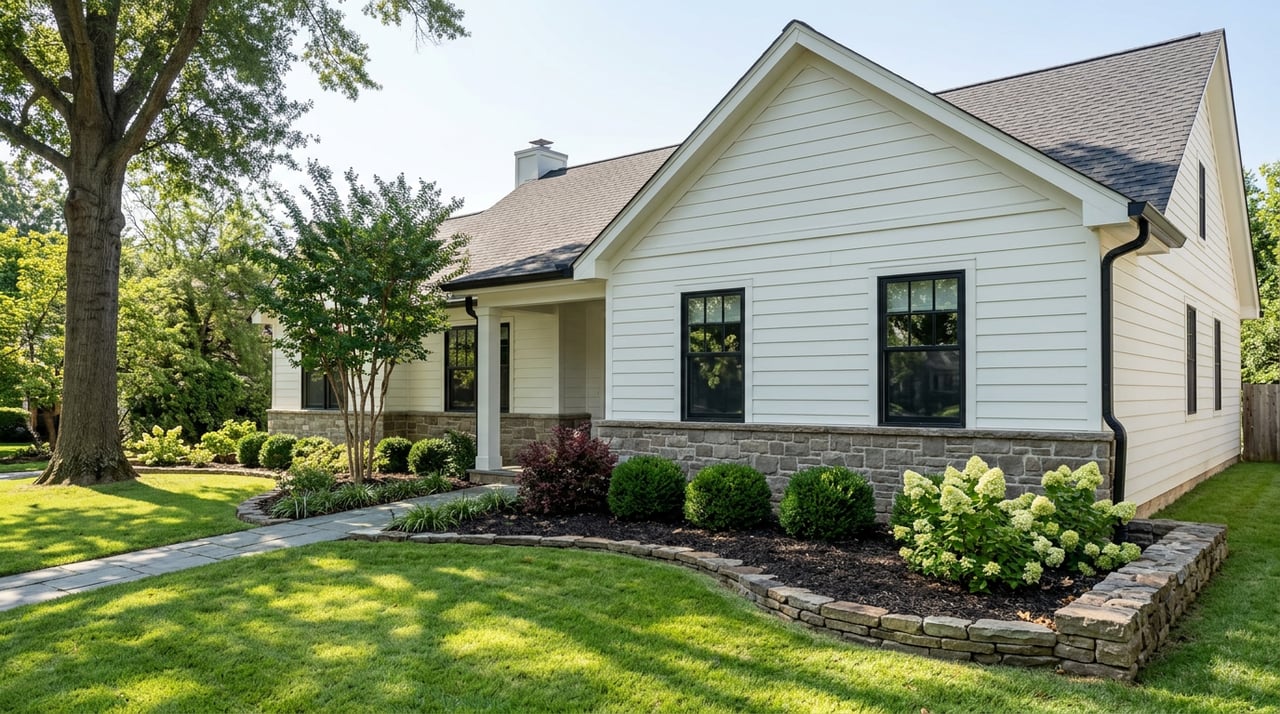
A 0.418-acre lot at 8616 Sharonbrook Drive is on the market in SouthPark right now. No house included. Just dirt, with fully approved engineering plans attached for a five-unit, three-story townhome building, each unit carrying roughly 2,013 square feet of heated space and a two-car tandem garage. Someone will pay real money for that lot, tear down nothing because there is nothing left to tear down, and build five homes where one used to stand.
That listing is a small window into how SouthPark actually works right now, and it explains something the published median price cannot: why two houses a few streets apart can be moving in opposite directions on paper while the neighborhood as a whole looks like it is simply appreciating.
The median is an average of two different stories
Ask what a SouthPark home costs and you will get an answer that depends entirely on which SouthPark someone means. Zillow's home value index puts the typical SouthPark home at $679,522, up 2.6% over the past year, a number that reads like slow, steady, single-speed growth. But a broader accounting of every property type sold in the area, houses, condos, and townhomes together, puts the average sale price above $1.2 million, more than double the Charlotte metro average. Those are not two measurements of the same thing rounding differently. They are two different markets getting folded into one headline number.
The gap exists because SouthPark's single-family footprint ran out of room to grow outward decades ago. There is no raw land left inside the established boundary for a builder to buy and subdivide. Every new single-family house has to come from somewhere, and that somewhere is almost always a standing older home that gets purchased, demolished, and replaced. A local market analysis of the submarket puts it plainly: SouthPark's single-family supply has no open-land development pipeline, so new inventory comes from teardown-and-rebuild on existing parcels rather than fresh subdivisions, which means finished-lot supply cannot expand quickly even when prices climb.
That single fact reshapes how a buyer or seller should read every other number in this market.
What the rebuild cycle has already done to SouthPark's housing stock
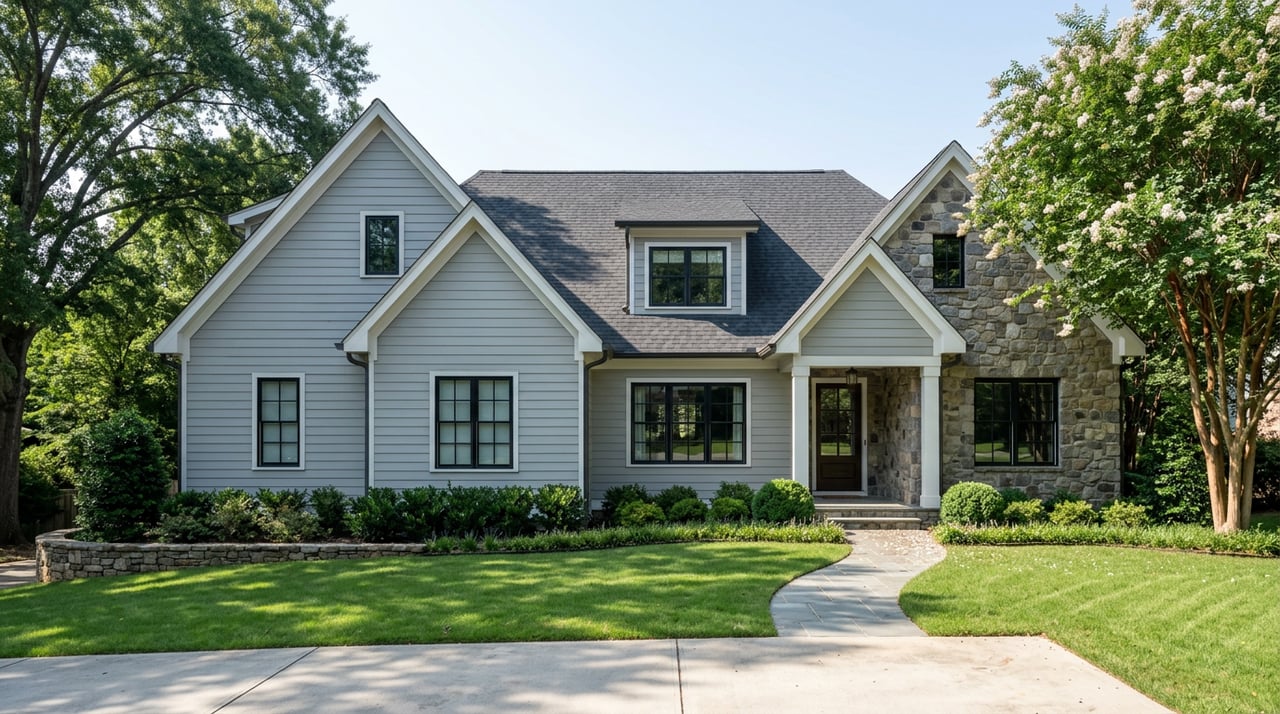
Subdivision-level MLS data on SouthPark single-family homes shows sales over the past year ranging from $710,000 to $5 million, with a median time on market of just 29 days and a median lot size around 0.4 acres. The detail that matters most is the median year built: roughly 2006. That is not a typo and it is not new construction in the literal sense. It means half of SouthPark's single-family homes have already been through a rebuild cycle at some point in the last twenty years. The teardown wave described above is not a coming trend here. It has already happened to a meaningful share of the neighborhood.
The builders doing this work are not anonymous developers. MLS subdivision records for SouthPark name Barringer Homes, Bonterra Builders, Copper Builders, Halley Douglas, McCormick Custom, Saussy Burbank, Simonini, and Waters as active builders in the area. One current land listing just over the SouthPark line in Cotswold names Alan Simonini Homes, a Charlotte custom builder with more than fifty years in the market, as the builder slated for a new homesite. These are not names a spreadsheet produces. They are the people actually buying lots, pulling permits, and setting the price floor for what a rebuilt SouthPark home costs.
Beverly Woods shows what happens on the other side of the median
Not every pocket of SouthPark is moving at the same pace. Beverly Woods, one of the neighborhood's original ranch-home sections, tells a different story from the teardown corridor. Listings there carried a median price of $815,000 in May 2026. Over the trailing twelve months, the median sale price came in at $800,000, down 2% from the period before. Homes there sell in about 41 days on average.
That is not a market in decline. It is a market where the older, unrebuilt housing stock is still being valued and sold as housing, not as a lot with a structure on it that happens to be in the way. A seller in Beverly Woods with a well-kept ranch is competing against other intact ranches. A seller with a similar-sized lot two streets over, in a pocket where teardown activity has already taken hold, may be competing against the value of the dirt itself.
Here is how the three tiers actually compare, based on the most current figures available for each:
| Submarket | Recent price signal | What it represents |
|---|---|---|
| Beverly Woods (ranch-era pocket) | $800K median sale, trailing 12 months, down 2% YoY | Original 1960s-70s stock, still selling as intact homes |
| SouthPark overall, single-family | $710K to $5M range, past year, median build year ~2006 | A blend of untouched older homes and completed rebuilds |
| Foxcroft (adjacent, comparable enclave) | $2.8M median sale, spring 2026 listings | Larger lots, median build year ~1978, rebuild cycle still in progress |
Foxcroft is worth including here because it shows where SouthPark's own rebuild wave came from and where the next one is likely heading. Subdivision data puts Foxcroft's typical lot at roughly 0.65 acres against SouthPark's 0.4-acre median, and its median build year at 1978, twenty-eight years behind SouthPark's own median. Named builders there, including Chiott Custom Homes and Salins Group, are doing the same work in Foxcroft that Barringer, Copper, and Simonini have largely already finished in the core SouthPark footprint. If the mechanism holds, Foxcroft is a few years behind SouthPark on the same curve, not a separate story.
Why the median price is the wrong number to watch
A rising median in a market like this can mean two very different things. It can mean existing homes are genuinely worth more to the people living in them. Or it can mean the mix of what is selling has shifted toward higher-priced rebuilds while the older stock underneath stays flat or softens, exactly what Beverly Woods and the broader SouthPark rebuild data show happening at the same time. The published median cannot tell those two stories apart. It just averages them.
The number that actually forecasts where this goes next is teardown and permit activity at the parcel level. A brisk pace of builders acquiring and demolishing standing homes today points to tighter finished-lot supply two or three years out, since a torn-down house cannot be replaced overnight. That is a mechanism a buyer or seller can watch and plan around, not a mood or a headline. Mecklenburg County's public building permit records are the place to see it happening in real time, address by address, well before it shows up in any published median.
For someone selling an older home in a rebuild-adjacent pocket, that means getting an honest read on whether the property is worth more as a house or as a lot before setting a list price, since those can be very different numbers on the same parcel. For someone buying, it means the median price for "SouthPark" tells you almost nothing about what a specific block will cost, because the block two streets over may be five years further along the same rebuild curve.
A few questions worth asking before you act on the median
If SouthPark's median build year is already around 2006, is the rebuild opportunity gone? Not entirely. Pockets like Beverly Woods still hold a meaningful share of pre-1980s homes, and the same mechanism that reshaped the rest of SouthPark is still working through those streets on a lot-by-lot basis.
Does a lower price in a pocket like Beverly Woods mean it is a worse investment? Not necessarily. It means that pocket is still being priced as livable housing rather than teardown value, which can be an advantage for a buyer who wants an existing home rather than new construction, and a consideration for a seller deciding whether to sell as-is or explore a rebuild path first.
Is Foxcroft a preview of where SouthPark prices are headed? It is a reasonable comparison point given the lag in build years and lot sizes, but every block has its own history of ownership turnover, lot configuration, and builder interest, so treat it as context rather than a guarantee.
Numbers like these only mean something when someone can translate them into a decision about a specific address, which is where a construction-savvy read on the property matters as much as the comps. If you are weighing whether a SouthPark or Beverly Woods property is worth more as a home or as a rebuild opportunity, or trying to figure out where a Foxcroft comparison actually applies to your situation, Carolinas Real Estate Partners can walk the property with you and put real numbers behind the decision. Request a Home Valuation to start that conversation.