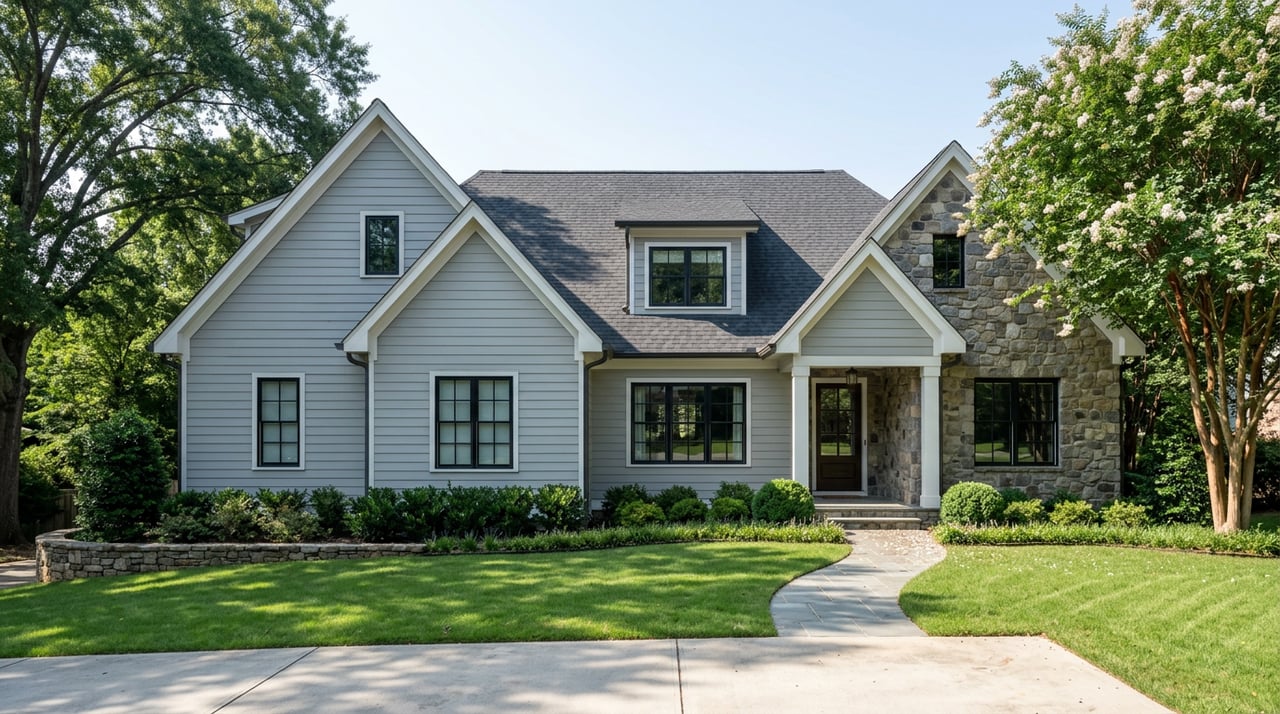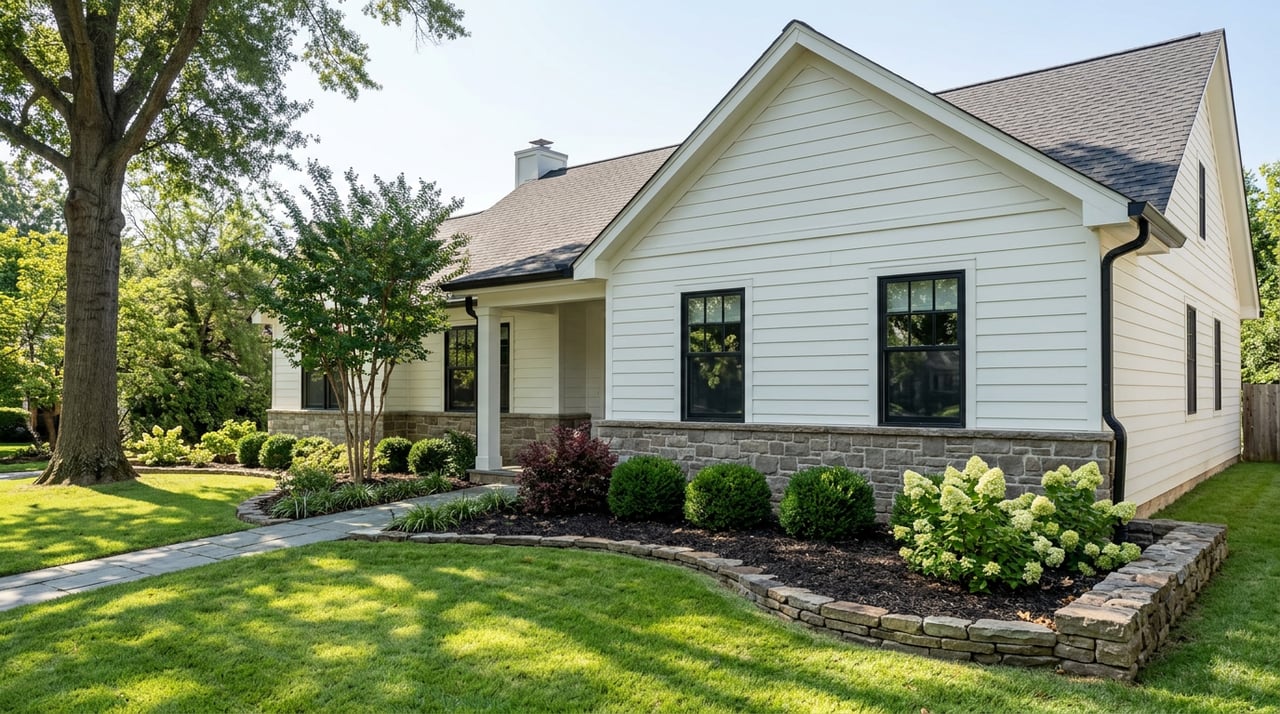
Two houses on the same cul-de-sac, built by the same production builder, closed within a year of each other. One flushes into a Union County Water line that eventually reaches a treatment plant the county owns and runs. The other flushes into a package plant the builder installed on site, a plant that now belongs to the homeowners association, funded by dues, maintained by whoever the HOA board hires this year. From the driveway, the two homes are identical. From a spreadsheet fifteen years from now, they are not the same investment at all.
That gap is not hypothetical in Waxhaw right now. It is a direct consequence of how much wastewater capacity the town actually has left, and it is the kind of detail a buyer needs to run down before writing an offer, not after the inspection period has closed.
The capacity number that explains the workaround
Union County Water treats wastewater for Waxhaw at its 12 Mile Creek facility, which is permitted to handle 7.5 million gallons a day. According to local reporting from The Waxhaw Wall, roughly 90.6 percent of that capacity had already been allocated, leaving about 0.708 million gallons a day for every project that hasn't secured its own agreement yet. Capacity isn't handed out on a first-come basis at the point of sale. It's locked in earlier, through an Extension Agreement between the developer and Union County Water, once the county has approved the project's sketch and full construction plans and the developer has cleared its state permits. A subdivision that got its agreement signed two years ago is sitting on guaranteed capacity. One that's still working through approvals may not be.
That squeeze is why, in July 2023, Waxhaw's Board of Commissioners amended town ordinances to allow private sewer package plants for projects that can't get county capacity. A package plant is a small-scale treatment facility built on or near the development, sized to handle just that community's flow instead of tying into the county system. It solves the immediate capacity problem for the builder. It does not solve it the same way for the buyer who moves in years later.
What "package plant" actually commits you to
Builders build package plants to get a project approved and sold. Long-term operation is a different question, and it typically lands on the HOA. That arrangement matters because package plants are expensive to run relative to the amount of capacity they provide, and the boards that inherit them are usually volunteer homeowners, not utility operators. When maintenance lapses, the risk isn't a slow drain or a bad smell. It's improperly treated effluent leaving the system before it's supposed to.
None of this shows up on a listing sheet. It shows up in HOA meeting minutes, in the reserve study if one exists, and in the utility easement language buried in the recorded plat. A buyer touring a new-construction community in Waxhaw this fall has no way to tell, standing in the model home, whether the neighborhood's wastewater runs to the county or to a plant the HOA now owns.
The water side is under its own repair right now
Sewer capacity isn't the only Waxhaw utility system showing its age. Union County Water started replacing about 8,000 linear feet of downtown water main on September 29, 2025, tearing out cast iron pipe installed in the 1930s, with the contractor, Dawn Development Company, targeting completion by October 2026. That project is paired with a second phase, the Waxhaw North Sanitary Sewer Replacement and Rehabilitation project, which covers about 4,000 feet of existing sewer line downtown and was slated to begin between spring and early summer 2026, meaning it should be underway or nearly finished by the time a buyer is touring homes this fall.
That work is happening at the same time the town is approving more rooftops to connect to the same systems. Waxhaw's Board of Commissioners adopted a Downtown Master Plan in late October 2025, and more than 3,200 residential units have been approved since 2023. Every one of those units eventually needs somewhere to send its wastewater, and the county's remaining margin was already thin before that pipeline was approved.
Three wastewater realities, one Waxhaw zip code
| System type | Who maintains it | What to ask before you offer | Financing note |
|---|---|---|---|
| Union County Water municipal sewer | Union County Water | Confirm the Extension Agreement is in place and recorded, not pending | Treated like any public utility connection by conventional, FHA, VA, or USDA underwriting |
| HOA-owned package plant | The homeowners association, usually via a contracted operator | Ask for the plant's maintenance history, the reserve fund balance tied to it, and whether any special assessments have been levied | Lenders generally don't flag it separately, which is exactly why a buyer has to ask instead |
| Individual well and septic | The homeowner | Ask for the septic permit on file with Union County Environmental Health and the age of the well | FHA, VA, and USDA all impose distance and water-quality testing rules before closing |
Before you write the offer
A few questions are worth asking your agent, the builder's sales representative, or the HOA management company directly, before earnest money is at risk:
- Is this specific lot served by Union County Water sewer, a private package plant, or an individual septic system?
- If it's a package plant, who currently operates it, and can the HOA produce a maintenance log or a reserve study that includes it?
- If it's septic, what does Union County's Environmental Health record show for the original permit and any repairs?
- If you're financing with FHA, VA, or USDA, has your lender confirmed the property type and timeline for water testing before the appraisal is ordered?
Union County's Environmental Health division requires a site evaluation before any new septic system is permitted, and that evaluation is also required before repairs or expansions to an existing system. If a home has a septic system already in place, that permit history exists somewhere. It's worth requesting it rather than assuming a newer home means a newer, unremarkable system.
What government-backed financing adds to the picture
If you're buying with an FHA, VA, or USDA loan, a well or septic system triggers extra steps that a municipal sewer connection doesn't. FHA guidelines generally call for at least 50 feet between a well and a septic tank, and 75 to 100 feet to the drain field, with the well kept at least 10 feet from the property line. Water quality results carry an expiration window rather than staying valid indefinitely, and VA loans specifically require the sample to be collected by a disinterested third party, not the buyer, seller, or agent, with results good for 90 days from certification. USDA loans tend to be the strictest of the three, generally requiring a well water inspection regardless of the property's condition.
None of this is a reason to avoid a well-and-septic home in Waxhaw, where plenty of established and equestrian-zoned properties rely on exactly that setup. It is a reason to build the testing timeline into your due diligence period from day one, since rural buyer add-ons for well, septic, and radon testing typically run an extra $600 to $1,200 in cash to close, and a failed test doesn't have to kill a deal, but it does need time to resolve before closing.
A few quick questions
Does a package plant show up on a resale certificate? Not automatically. Resale certificates focus on HOA finances and dues, not utility infrastructure. If a package plant exists, it's worth requesting maintenance records and reserve fund detail specifically, rather than assuming the standard disclosure package covers it.
Can a package plant fail an inspection the way a septic system can? Package plants aren't typically part of a standard home inspection scope. If you have any reason to believe one serves your neighborhood, ask whether a specialized inspector or engineer can review its operating history before your due diligence period ends.
If I buy new construction specifically to avoid well and septic, am I in the clear? Not automatically. New construction can still be served by a package plant instead of the county system, which carries its own long-term maintenance questions even though there's no well or septic tank on the lot itself.
Wastewater infrastructure isn't the first thing most buyers think to ask about in Waxhaw, and it's exactly the kind of detail that construction-informed representation is built to catch before it becomes a surprise. If you're comparing new-construction communities against established Waxhaw neighborhoods and want someone who checks what's actually running underground, not just what's finished on top, Carolinas Real Estate Partners can walk the specifics with you. And if you're selling first, ask us for a home valuation so you know what you're working with before you start touring.