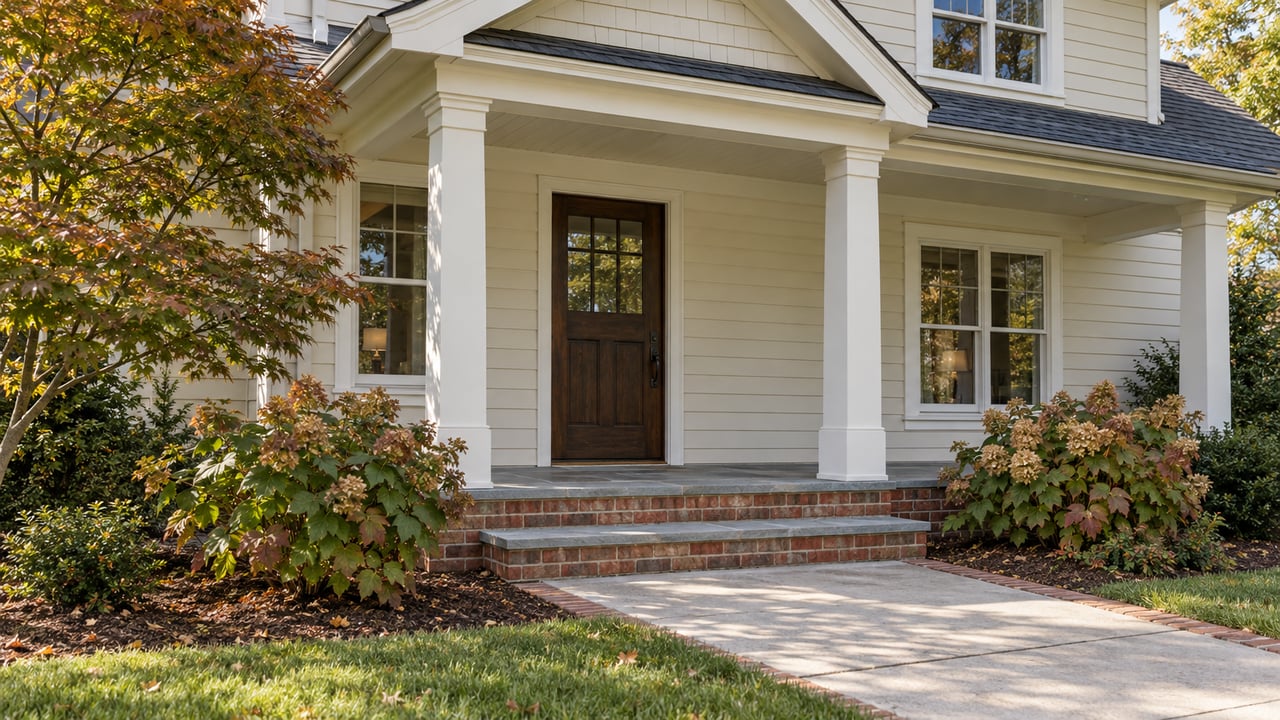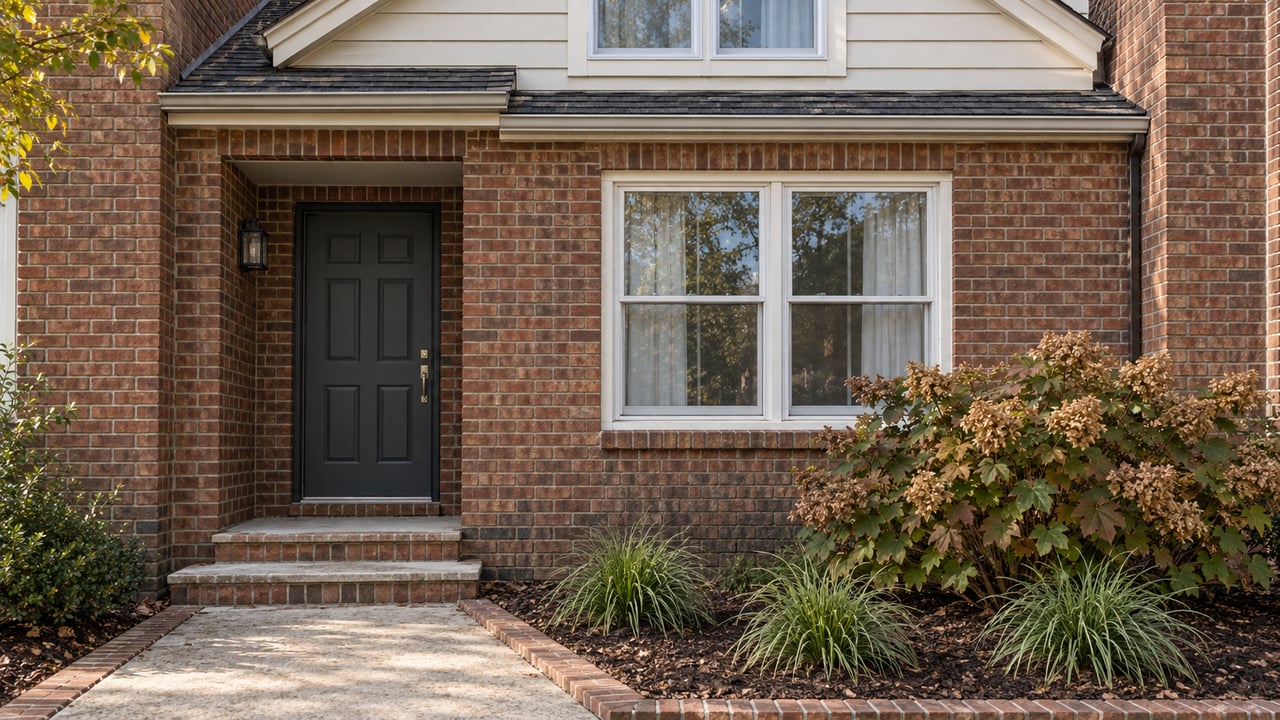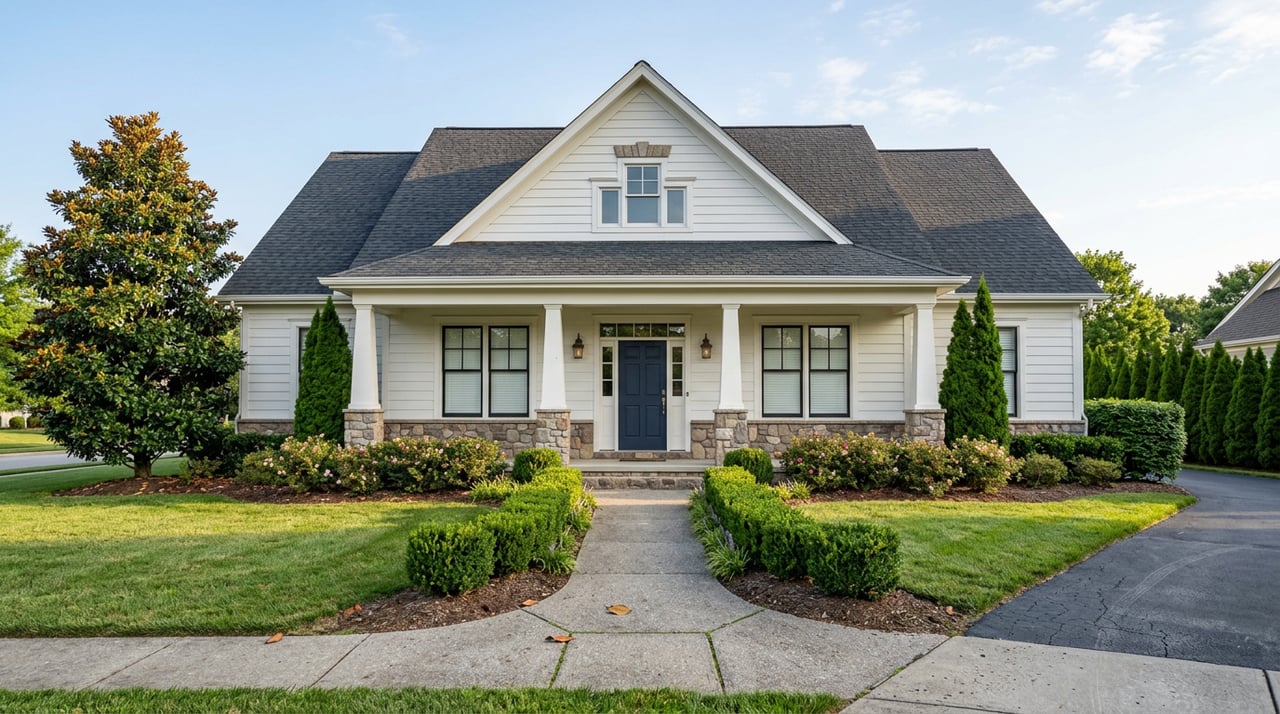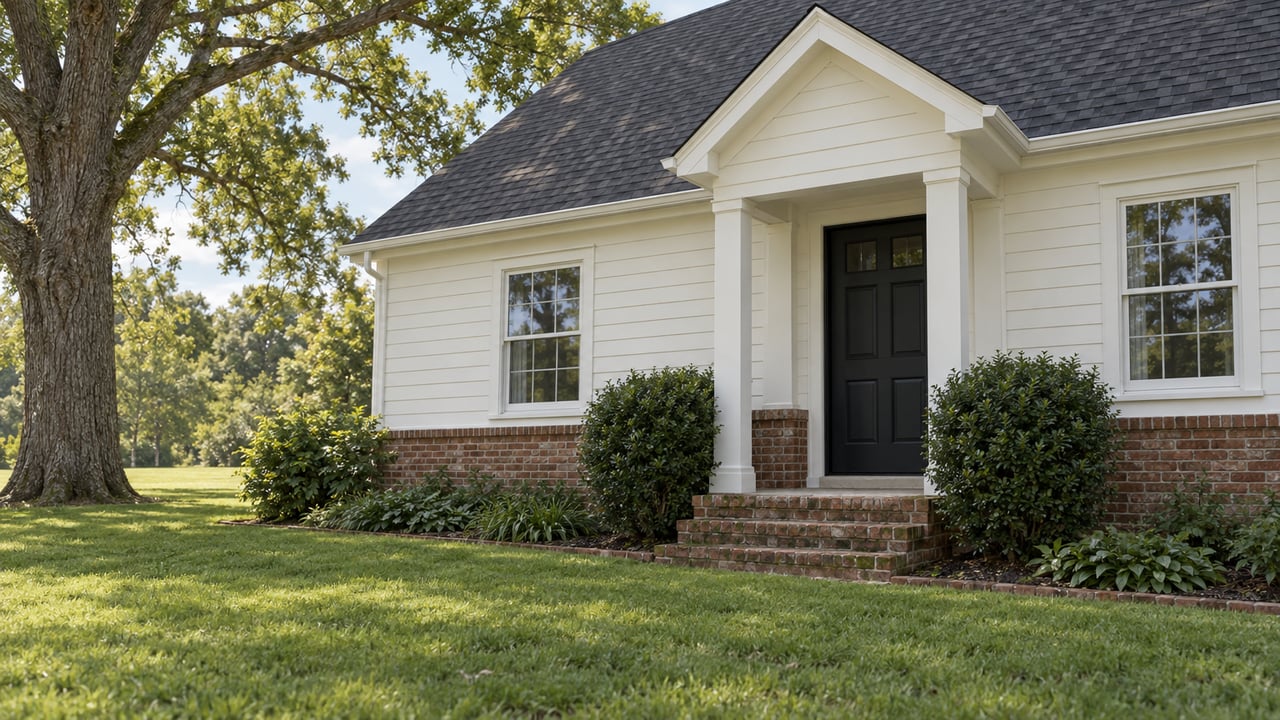
Drive down almost any street in Providence Plantation and the mismatch is obvious before you reach the stop sign. A low brick ranch with a carport sits two doors from a two-story transitional with a three-car garage and stone accents. Neither looks like an accident, because neither is. The neighborhood's own homeowners association has said as much on its history page: residents chose a lot first, then picked their own builder, which is why the original section never settled into one repeated floor plan the way a single-builder subdivision would.
That same lot-first pattern is why Providence Plantation isn't really one neighborhood for inspection purposes. It's several, stacked in time. Construction here started in the mid-1970s under developer Henry Newson and kept going in waves through the 1990s and 2000s, when Toll Brothers and Pulte added production-built sections alongside the custom homes that came before them. A subdivision that took roughly fifty years to fill in doesn't have one age. It has several, and what's buried under the yard depends on which one you're standing on.
One HOA, Several Different Construction Eras
The Providence Plantation Homeowners Association was incorporated in July 1977, originally representing about 300 families under a seven-member volunteer board. Today it covers more than 1,400 single-family homes, still runs on voluntary $80 annual dues, and still funds the same basic things it always has: entrance upkeep, a newsletter, and weekend security patrols. The Racquet and Swim Club is a separate membership entirely, with its lighted Har-Tru tennis courts and Junior-Olympic pool serving as the social center regardless of which decade a member's house was built.
That continuity is part of the appeal. It's also what makes the neighborhood easy to think of as a single age cohort when it isn't. Builders on record across Providence Plantation include early names like Harry Grimmer & Co. and Fortis Homes alongside the later production builders, and typical build years for homes here run from the mid-1970s into the 2000s, with some newer construction sprinkled in since. A buyer comparing two listings inside the same HOA boundary, same swim club, same school assignment, can be looking at homes built thirty years apart. The listing sheet won't flag that as a different category of risk. The plumbing does.
What Changed Underground Between 1970 and 2000
Sewer pipe materials didn't stay the same over that stretch, and the timing matters more than it looks. Clay tile pipe was the standard choice for homes built before the 1970s and is known for cracking and separating at the joints under pressure. Cast iron carried through the middle of the century and handles weight well, but corrodes from the inside out as acidic wastewater passes through it for decades, with plumbing sources putting its typical service life at 50 to 75 years. PVC, which resists both problems, didn't become the dominant choice until later in that same window.
That puts Providence Plantation's earliest phase, homes going up in the mid-1970s, right at the pivot point. A house built in 1975 is now roughly fifty years old, which sits at the front edge of cast iron's failure window rather than safely inside it. That doesn't mean every original-phase home has a corroding lateral line. It means the era makes it plausible enough that skipping the check costs more than making it. A Toll Brothers or Pulte-built home from the 2000s carries none of that same math. It's simply too young for the materials debate to apply.
The Tree Canopy Is a Selling Point and a Stress Test
Every description of Providence Plantation leads with the same detail: mature trees, wooded lots, a canopy that gives the streets a settled feel a new build can't fake. That canopy is also exactly the condition that makes aging pipe joints fail faster. Tree roots are drawn to the moisture inside a sewer line and will work into any crack or loose joint they find, and Charlotte's clay-heavy soil compounds the problem by shifting with moisture changes and creating low spots where pipes can sag over time.
None of that is unique to Providence Plantation. It's true of any Charlotte-area neighborhood with decades-old trees. What's specific to this subdivision is the overlap: the section most likely to still have older pipe material is the same section with the oldest, largest trees, because both trace back to the same original mid-1970s build-out. The feature that makes those streets desirable is the same feature adding pressure to whatever is running underneath them.
What a Standard Inspection Doesn't Cover
A general home inspection in North Carolina looks at visible systems: plumbing fixtures, the roof, the HVAC unit. It does not include the underground sewer line running from the house to the street connection. That's a separate service, usually called a sewer scope, where a waterproof camera is fed through a cleanout access point to check for root intrusion, cracked or bellied sections, and corrosion along the way.
It isn't a large expense relative to what it can catch. Local providers price a scope in the neighborhood of $200 to $400, while an actual sewer line replacement in the Charlotte area typically runs $50 to $250 per foot, and a full line replacement job can land anywhere from $5,000 to $20,000 depending on length and access. A scope ordered before closing turns an unknown into a negotiable line item. Skipping it on a fifty-year-old lateral just delays the same repair until it's an emergency instead of a contingency.
What the Disclosure Form Actually Requires
The Residential Property and Owners' Association Disclosure Statement asks about sewage disposal type, as HomeLight explains. If nobody has ever scoped the line, its condition may still be unknown, regardless of what the form says.
That distinction matters more in a neighborhood like this one than in a subdivision where every house was built the same year by the same crew. A blank answer on a 1976-built home doesn't show that the line has been checked and passed. Most Providence Plantation homes, this close to the Providence Road corridor, would typically tie into the county sewer system rather than run on a private septic tank, which shifts the entire question away from a tank and drain field and onto that single lateral line and whatever material it was built from.
Original Phase vs. Later Build-Out
| Original 1970s phase | 2000s production sections | |
|---|---|---|
| Typical builders | Custom builders, individually selected lots | Toll Brothers, Pulte |
| Likely pipe material | Cast iron or clay possible, era-dependent | PVC standard |
| Age in 2026 | Approaching or inside cast iron's 50-75 year service window | Well inside expected service life |
| Tree canopy maturity | Fully established, largest root systems | Younger, less root pressure on lines |
| Sewer scope priority | High, before writing or before closing | Lower, though still reasonable due diligence |
What This Actually Changes If You're Under Contract
The build year on a Providence Plantation listing is worth more than a talking point about character and lot size. It's a rough proxy for what's likely running underground, and it should shape how a buyer scopes their due diligence period. A few things follow directly from that:
- Ask the listing agent for the specific year the home was built and, if available, which builder constructed it, rather than treating "Providence Plantation" as one age bracket.
- Order a sewer scope as part of the inspection period for any home built before the mid-1980s, regardless of how clean the disclosure form reads.
- Treat a clean disclosure statement as evidence the seller hasn't reported a problem, not evidence the line has been checked.
- Factor tree proximity to the likely lateral path into the decision, since the same mature canopy that sells the lot can be actively working against an older pipe.
- For newer sections built by Toll Brothers or Pulte, a scope is still reasonable due diligence but carries less urgency given the shorter time the line has had to age.
None of this changes what makes Providence Plantation worth choosing. The swim club, the tree-lined streets, the mix of architectural styles that came from letting homeowners pick their own builders decades ago, those are still the reasons people land here. It just means the due diligence period should account for which decade of that story a specific house belongs to.
A few quick questions
Is a sewer scope part of a standard home inspection? No. A scope is an optional add-on a buyer requests during due diligence.
If a scope finds root intrusion, what are the options? Providers typically offer pipe relining, which seals a liner inside the existing pipe, partial replacement of the damaged section, or full replacement if the line has collapsed. A buyer can use the scope report to negotiate a credit or repair before closing rather than inheriting the problem.
Does a newer build in the same subdivision ever need a scope? It's lower priority given PVC's longer service life and younger tree root systems, but new construction isn't automatically exempt. Builders inspect above-ground plumbing during construction, not the underground line, so debris left in the pipe during the build can still show up on a scope even in a recently finished home.
If you're evaluating a specific address in Providence Plantation and want to know what its build year actually means for your inspection period, Carolinas Real Estate Partners can walk the timeline with you and connect you with the vetted inspectors and plumbers who already know which sections of this neighborhood are worth the extra look.
This article is general information, not legal, tax or financial advice. Consult a qualified professional about your situation.